Buying Guide —
Large-Format Tile (12x24 and Up): Why It Needs a Flattened Slab and Leveling Clips
Large-format tile is the most unforgiving floor there is. A 24-inch tile bridges every slab wave a small tile would hide, so the whole job lives or dies on two things generic tile pages skip: a flattened substrate and a leveling-clip system. Here is how we set 12x24 and up so it stays flat for decades.
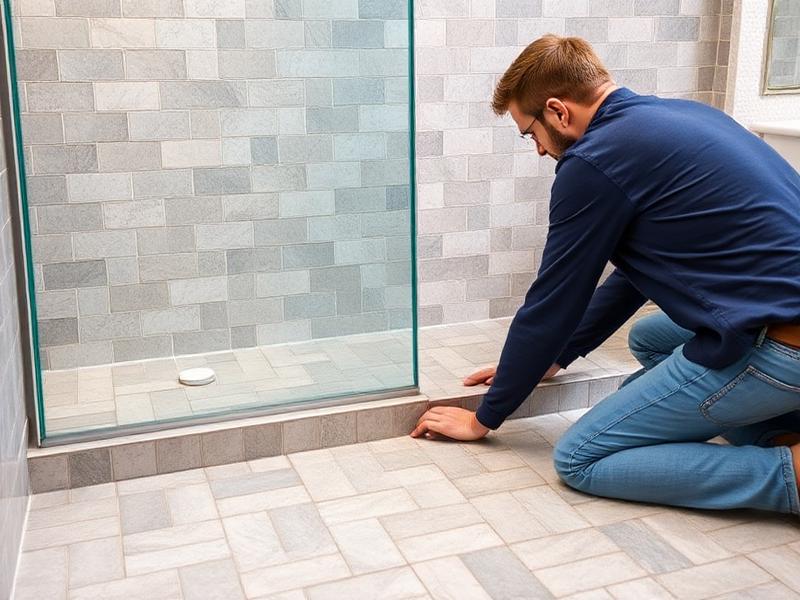
At Big Head Flooring, large-format tile is the floor homeowners in Escondido, Temecula, and Murrieta ask us for most, and it is also the one we see botched most often by installers who treat it like any other tile. Here is the blunt version before we ever set a single piece: a 12x24 or larger tile is the least forgiving surface you can put on a floor. A small tile can ride over a minor slab wave. A big tile bridges that same wave and shows every fraction of lippage at the edge. Get the slab flat and the clips right and it lasts decades. Skip either and you are looking at cracked grout joints and hollow tiles inside two years.
A small tile can ride over a slab wave. A big tile bridges it and shows every fraction of lippage at the edge. That single fact drives everything about how large-format gets set.
We are licensed and insured, we run ASTM moisture testing on every slab, and we set large-format the same careful way on every job. This is the installer-grade detail the generic "tile installation" pages leave out, because it is the part that takes real work. No shortcuts. This guide walks exactly what we do and why, so you know what to ask for before anyone quotes your floor.
Large-format tile installation: why the slab has to be flat first
Large-format tile (12x24 and up, including big porcelain slabs) is rigid and it is wide, so it can only sit as flat as the substrate under it. On slab-on-grade Inland Empire homes, that means the single most important step happens before the first tile touches thinset: we bring the slab into the 3/16 inch over 10 feet flatness threshold. Miss that and the tile telegraphs every dip and crown as lippage, cracked grout, and hollow spots. This is the step most "tile install" quotes quietly skip, and it is the reason a cheap quote balloons or the floor fails early.
Inland Empire fact: Nearly every newer home in Temecula, Murrieta, Menifee, and Wildomar is slab-on-grade, and slabs move with soil and moisture. Older Escondido homes around Grand Avenue and Washington Park are pier-and-beam over crawl spaces, which is a completely different flatness profile and a different prep plan.
The bigger the tile, the tighter the flatness has to be, because the tile spans more of the floor at once. A 24-inch tile set across a slab that dips a quarter inch over that span rocks on its high points and lips at its edges. So the first thing we do is put a straightedge on the floor, high spot by high spot, and read exactly how far off it is. A flat, clean slab is fast. A slab that needs help is more labor, and we would rather price that honestly than lowball it and hand you a floor that fails.
How we bring a slab into spec before large-format goes down
- Flatness check against the 3/16 inch over 10 feet threshold, mapped across the whole floor, not spot-checked.
- ASTM F1869 calcium chloride and ASTM F2170 relative humidity testing on the slab, because a high moisture number changes the whole plan. Near Lake Elsinore we have logged calcium chloride results as high as 8 pounds per 1,000 square feet on slab-on-fill.
- Flexible polyurea crack filler across any active cracks, so the repair moves with the slab instead of re-cracking under rigid tile.
- Self-leveling underlayment rated to 1/2 inch depth to bring low areas back into the flatness window before the tile ever comes out of the box.
Ready when you are: call (760) 216-2984 and we will get a straightedge and a moisture meter on your slab before you spend a dollar on tile.
Do large tiles need leveling clips?
Yes. On large-format tile (12x24 and up) we use a leveling-clip system as standard, not as an upgrade, and it is one of the clearest signs of whether an installer knows how to set big tile. A leveling clip is a small spacer that slides under the edges of two adjacent tiles and pulls their faces flush while the thinset cures. On a big tile, even a properly flattened slab and a skilled hand can leave a hair of lippage at a corner, and on a 24-inch tile a hair of lippage catches light, catches a bare toe, and reads as a bad install. The clips hold every edge flush until the mortar locks it in.
"Leveling clips are not there to fix a bad slab. They are there so a good slab and a good setter finish dead flat, edge to edge, with no lippage on a tile big enough to show it."
Here is why the clips matter more the bigger the tile gets:
- Edge-to-edge flatness. Two big tiles that are each flat can still meet at a slightly proud edge. The clip clamps that seam flush while the thinset sets, so the finished floor reads as one plane.
- Even thinset compression. As the clip pulls the tiles level, it also seats them evenly into the mortar bed, which helps avoid a corner that sits high on a thin spot of thinset and goes hollow later.
- Lippage control on wide formats. The wider the tile, the more a tiny height difference at the joint shows. Clips are how we hold a 12x24 or a large porcelain slab within a flat tolerance you cannot get by feel alone.
A leveling clip system is more product and more handling per tile, so it is real labor on the line, and it is labor that a small-tile mosaic floor does not need. That is part of why large-format costs more to install per square foot, which we break down in our full tile installation process.
Why full back-butter coverage decides whether the tile stays bonded
Even a flat slab and perfect clips do not matter if the tile is not fully bonded to the mortar underneath it. On large-format we back-butter every tile with modified thinset for full coverage across the entire back of the tile, not just ridged troweling on the slab. A big tile has a lot of surface area, and any void under it is a spot with no support, which is exactly where a tile cracks under a dropped pan or goes hollow under foot traffic. Full back-butter coverage is the difference between a tile that stays put and one that sounds hollow when you tap it in year three.
The mistake we correct most often on other crews' large-format work: ridged thinset troweled on the slab only, big voids under the middle of each tile, and a floor that goes hollow the first year. Big tile needs full contact, and full contact means back-buttering.
We use modified thinset, not premixed adhesive, and we never use premixed adhesive in wet areas at all. Premixed mastic cannot support the weight and the bond a large-format porcelain tile needs, and in a wet zone it never fully cures behind the tile. If your project is a shower or a wet floor, the mortar spec matters even more, and so does the waterproofing.
Large-format porcelain in kitchens, baths, and wet areas
We recommend large-format porcelain (12x24 and up) as the floor in older Escondido and Inland Empire kitchens, set on a flattened substrate, because it looks great, wears for decades, and shrugs off the spills a kitchen floor takes. A large-format porcelain kitchen floor over a properly prepped slab is one of the most durable surfaces you can put in a house. The catch is the same one that runs through this whole guide: the bigger the tile, the flatter the slab has to be, so a kitchen full of cabinet toe-kicks and a slab that needs leveling is real prep work before the porcelain goes down.
Kitchen sequencing: we set the floor tile on a flattened substrate, and we never install a backsplash before the countertops are in. Backsplash before counters leaves a gap or a bad reveal at the counter line. Order matters as much as the tile does.
For a wet area, large-format changes from a floor question into a system question. A walk-in shower or a wet bath floor is not just tile, it is a waterproofing assembly that has to be built and tested before a single tile is set:
- A full waterproof membrane, Schluter Kerdi or Laticrete Hydro Ban, behind and beneath the tile in the wet zone.
- A 24-hour flood test of every shower pan before any tile goes down. If it holds, we tile. If it does not, we find the leak now instead of behind your finished wall.
- Epoxy grout in the wet zone instead of standard cementitious grout, because it resists water and staining where it matters most.
We will not close a shower or set wet-area tile without flood-testing the pan for 24 hours first. If you want the local, project-level version of large-format done right, here is large-format tile installation in Escondido and our page on large-format porcelain for kitchen floors. Talk to us about your room: (760) 216-2984.
When large-format tile is NOT the right call
We are not going to talk you into a large-format floor a room does not need. If you have a small, dry, low-traffic area, a laundry nook, a single closet, a powder room, and the slab is already flat and sound, a smaller field tile or an SPC-core vinyl plank may serve you fine and save the prep labor that large-format demands. Large-format punishes a lazy slab, so on a floor that is noticeably out of plane and on a tight budget, a smaller tile that rides the wave more forgivingly can be the honest call, and we will say so.
Where large-format earns every dollar: an older kitchen, an open living area, a high-traffic entry, and any room where you want a floor that looks seamless and lasts decades. Where it is a false economy: a small dry room on a tight budget, or any floor where nobody is willing to flatten the slab first, because an unflattened slab under big tile is a callback waiting to happen. If that is the room you are asking about, we will tell you straight before you spend anything.
Frequently asked questions
Do large tiles need leveling clips?
Yes. On large-format tile (12x24 and up) we use a leveling-clip system as standard practice. A big tile shows even a fraction of lippage at its edges, and the clips pull adjacent tiles flush while the thinset cures so the finished floor reads as one flat plane. Clips are not a fix for a bad slab, the slab still has to be flattened to the 3/16 inch over 10 feet threshold first, but they are how a good slab and a careful setter finish dead flat edge to edge on a tile wide enough to reveal any height difference. Small mosaic and standard field tile are more forgiving and do not always need them.
How flat does the substrate need to be for large-format tile?
The slab should sit within 3/16 inch over 10 feet, the same flatness threshold flooring warranties require, and the bigger the tile the more that matters because a wide tile bridges more of the floor at once. On slab-on-grade Inland Empire homes we map the flatness high spot by high spot, fill active cracks with flexible polyurea crack filler so they move with the slab, and pour self-leveling underlayment rated to 1/2 inch depth to bring low areas back into spec before the tile goes down. We also run ASTM F1869 and F2170 moisture tests on the slab first, because a high reading changes the whole plan.
Why is large-format tile harder to install than regular tile?
Because it is rigid and wide, so it can only sit as flat as the substrate under it and it shows any imperfection a small tile would hide. That means more substrate flattening, a leveling-clip system to hold adjacent tiles flush, and full back-butter coverage with modified thinset under every tile so there are no voids that go hollow or crack later. Each of those is real labor that small or mosaic tile does not require, which is why large-format costs more per square foot to set. Done right on a flattened slab, though, it is one of the most durable floors you can own.
Is large-format porcelain a good kitchen floor?
Yes, it is our recommended floor for older Escondido and Inland Empire kitchens, set on a flattened substrate with full back-butter modified thinset coverage. Large-format porcelain looks great, wears for decades, and handles the spills a kitchen takes. The one requirement is prep: the bigger the tile, the flatter the slab has to be, so a kitchen with a slab that needs leveling is real prep work before the porcelain goes down. We also sequence it correctly, floor tile on a flattened slab and never a backsplash before the countertops are installed.
Do you serve my city?
We serve Escondido, Lake Elsinore, Menifee, Murrieta, Oceanside, Temecula, Vista, and Wildomar across the Inland Empire and North San Diego County. We are licensed and insured, run ASTM moisture testing on every slab, back our work with a two-year labor warranty, and offer free estimates on every project.
Get large-format tile set flat the first time
Large-format tile is only as good as the slab under it and the care that goes into setting it. Let us map your slab's flatness, read the moisture, and spec the prep, the leveling clips, and the back-butter coverage in one honest quote. Call (760) 216-2984 for a free estimate, see our full tile installation process, or read about large-format tile installation in Escondido. Installed right the first time, guaranteed.