Cost Guide —
What Drives Tile Installation Cost Per Square Foot in the Inland Empire
Anyone who quotes you a tile installation price per square foot before seeing your floor is guessing. Here are the real cost drivers under your slab, tile by tile, and why your quote varies from the number a neighbor got.
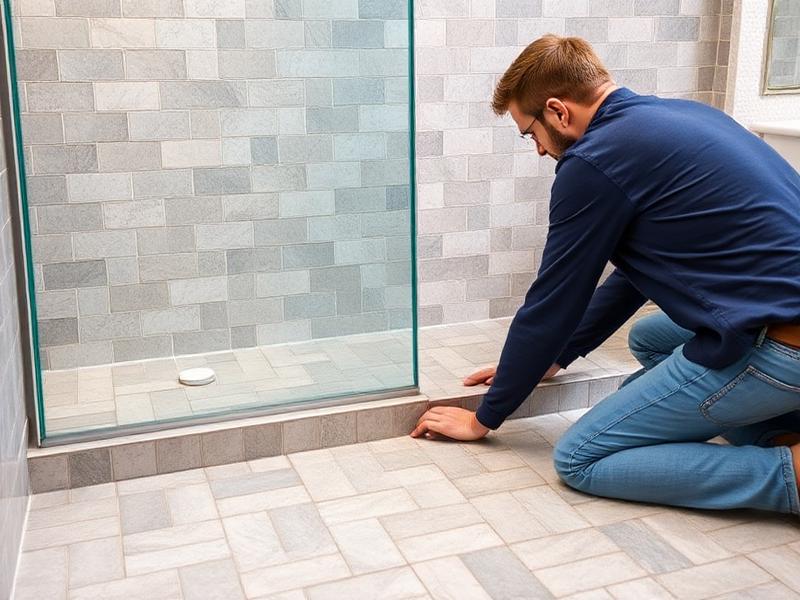
At Big Head Flooring, "how much does tile installation cost per square foot?" is the question we get most before a site visit, and the honest answer up front is this: any contractor who hands you a firm per-square-foot number over the phone is guessing. The tile is the cheap part. What decides your real number is everything underneath and around it. This guide walks the exact drivers we price around across Temecula, Murrieta, Menifee, Escondido, and Oceanside, so you know why one quote comes in higher than the one your neighbor got.
The tile is the cheap part. What decides your real number is everything underneath and around it.
We are licensed and insured, we run ASTM moisture testing on every slab, and we give upfront, honest quotes with no hidden fees or surprises after a site visit. We will not throw a price at you before we see your floor, because the slab, the tile size, and the wet areas decide the labor, and those change from house to house. No shortcuts. Here is what actually moves the meter.
What affects tile installation cost the most?
The biggest driver of tile installation cost is almost never the tile itself. It is the condition of what the tile sits on and how much of your project is wet area. On a typical Inland Empire slab-on-grade home, five variables set the labor: substrate flatness, tile format, waterproofing scope, layout complexity, and demolition of the old floor. Get those five right in the estimate and the number holds. Miss them and the "cheap" quote balloons mid-job.
"We build every tile estimate around what your specific floor needs, not a flat rate off a rate sheet. That is why we measure the slab before we talk price."
Here is the short list, ranked by how often each one is the reason a quote runs higher than expected:
- Substrate flattening. Tile is rigid. If the slab is out of flat, the tile lippage shows and the bond fails. Bringing a low slab into spec is labor and material that varies hugely by how far off it is.
- Tile format and size. Large-format tile takes more labor per square foot than small mosaic or standard field tile, for reasons we cover below.
- Waterproofing scope. A dry-floor kitchen and a full walk-in shower are two different jobs. Wet areas need a membrane, and that is skilled labor plus a flood test.
- Layout complexity. Diagonal sets, herringbone, tight patterns, lots of cuts around cabinets and jambs. Every cut is time.
- Demolition and haul-off. Ripping out old tile is the slowest, dustiest part of the whole job.
We cover each below so you can see which ones apply to your room. See our full tile installation process for how these come together on an actual job.
Does subfloor prep add to tile cost? Usually the most of any single line
Yes, and on slab-on-grade Inland Empire homes it is frequently the single largest line on the estimate after the tile itself. Tile has almost no flex. Set it over a slab that dips or crowns and you get lippage, cracked grout joints, and hollow spots within a couple of years. Flooring warranties and good practice call for the slab to sit within 3/16 inch over 10 feet, and most slabs out here are not there without help.
This is why two identical-looking rooms can price differently. A flat, clean slab is fast. A slab that needs self-leveling underlayment poured to bring low spots back into the 3/16-inch-over-10-feet window is more material and more labor, and we cannot know which one you have until we put a straightedge and a moisture meter on it. Near Lake Elsinore we have logged calcium chloride readings as high as 8 pounds per 1,000 square feet on slab-on-fill, and a high moisture number changes the prep entirely.
What we actually check before quoting prep
- Flatness against the 3/16 inch over 10 feet threshold, high spot by high spot.
- ASTM F1869 calcium chloride and ASTM F2170 relative humidity moisture readings on the slab.
- Cracks that need flexible polyurea crack filler, which moves with the slab, instead of rigid epoxy that just re-cracks.
- Whether self-leveling underlayment (rated to 1/2 inch depth) is needed, and over how much of the floor.
Skip this step and you get the "new floor that failed early" call we take every week. This is the part we would rather price honestly than lowball. Ready when you are: call (760) 216-2984 and we will get a real read on your slab before you spend a dollar.
Why is large-format tile more expensive to install?
Large-format tile (12x24 and up, including big porcelain slabs) costs more per square foot to install than standard or mosaic tile for one core reason: it is far less forgiving of an imperfect substrate, so it demands more prep and more careful setting. A small tile can ride over a minor slab wave. A 24-inch tile bridges that same wave and shows every bit of lippage at the edges.
"Big tile is beautiful and it is the right call for older kitchens, but it punishes a lazy prep. The bigger the tile, the flatter the slab has to be, and flat costs labor."
Three things push large-format labor up:
- Flatness demand. The bigger the tile, the tighter your flatness has to be. More slab prep, more time.
- Leveling clip systems. We use leveling clip systems on large-format (12x24 and up) to hold adjacent tiles flush while the thinset cures. That is more product and more handling per tile.
- Full back-butter coverage. We back-butter every tile with modified thinset for full coverage under the whole tile, not just ridged troweling. On a big tile that is real time, and it is the difference between a tile that stays bonded and one that goes hollow. We never use premixed adhesive under tile.
We recommend large-format porcelain (12x24+) as the floor in older Escondido and IE kitchens precisely because it looks great and wears well, but the estimate reflects the extra care it takes to set right. That care is why it lasts.
How waterproofing and wet areas change the number
A tile floor in a dry kitchen and a walk-in shower are priced worlds apart, because a wet area is not just tile, it is a waterproofing system that has to be built and tested before a single tile goes down. This is where cutting a corner does the most damage, and where we will not.
We never close a shower or set wet-area tile without flood-testing the pan for 24 hours first. If it holds, we tile. If it does not, we find the leak now instead of behind your finished wall. That single step is why a bathroom quote reads higher per square foot than a bedroom-adjacent hallway of the same tile. It is also why we sleep fine about the two-year labor warranty behind our work.
Layout, cuts, and demolition: the labor you do not see in the tile price
Two rooms with the exact same tile and the exact same square footage can price differently based on pattern and what is already on the floor. A straight-set field of tile in an open room is fast. A herringbone or diagonal layout, a floor full of cabinet toe-kicks, door jambs, and tight closet cuts, is slow, because every cut is measured, scored, and dry-fit by hand.
Demolition is the other hidden line. Ripping out old tile bonded to a slab is the slowest part of the whole job, and thin-set grinding throws fine silica dust that has to be contained. On pre-1980 homes we recommend asbestos testing before removing old vinyl, mastic, or sheet flooring, and we coordinate certified abatement rather than disturb it ourselves. That testing and containment is labor that a bare-slab new-construction job simply does not have.
"The square footage on your floor plan is only half the story. The pattern you picked and the floor we have to remove first are the other half of the labor."
This is exactly why we quote after a walk-through, not off a phone call. We listen, we plan, we deliver, and the number we give you is the number you pay. Want the fast version? Request a free in-home estimate and we will measure the whole picture.
When you do not need us for tile at all
We are not going to talk you into a tile job you do not need. If you have a small, dry, low-traffic area, a single closet floor or a laundry nook, and the slab is already flat and sound, a competent DIY vinyl plank or a peel-and-stick may serve you fine and save the labor entirely. Tile earns its cost in wet rooms, high-traffic zones, and older kitchens where large-format porcelain over a properly prepped slab will outlast everything else in the house. In a dry spare room on a tight budget, it can be more floor than the room needs, and we will tell you that.
Where tile is worth every dollar of the install: any wet area, any high-traffic entry off a pool deck or garage, and any older kitchen where you want a floor that survives decades. Where it is a false economy: a dry, low-use room where a cheaper hard surface would do the same job.
Frequently asked questions
How much does tile installation cost per square foot?
There is no honest flat per-square-foot number without seeing your floor, and we will not pretend otherwise. Your real cost is driven by how much substrate flattening the slab needs, the tile format (large-format 12x24+ takes more labor than small field tile), whether the area is wet and needs a waterproof membrane and flood test, the layout pattern and cut count, and how much old flooring has to be demolished and hauled off. Two rooms with identical tile and square footage can price very differently once those variables are measured. We give upfront, honest quotes after a site visit, with no hidden fees or surprises.
Why is one tile quote so much higher than another?
Usually the gap is in what the two quotes did or did not account for underneath. A low quote that skipped slab flattening, waterproofing, or demolition looks cheaper on paper and then grows mid-job when those needs surface. Our quote prices the substrate prep, the moisture testing, the wet-area membrane and flood test, and the demolition up front, so the number you see is the number you pay. Cheaper before the work is not cheaper after it fails.
Does the type of tile change the installation cost?
Yes. Large-format tile (12x24 and up) and big porcelain slabs cost more to install per square foot than small or standard field tile because they demand a flatter slab, leveling clip systems to hold tiles flush while the thinset cures, and full back-butter coverage under every tile. Mosaic and small tile are more forgiving of a minor slab wave but can carry more grout labor. The material price and the labor to set it move together, and we spec both around your specific rooms.
Do you serve my city?
We serve Escondido, Lake Elsinore, Menifee, Murrieta, Oceanside, Temecula, Vista, and Wildomar across the Inland Empire and North San Diego County. We are licensed and insured, back our work with a two-year labor warranty, and offer free estimates on every project. If you are in Escondido, here is our tile installation in Escondido page for the local specifics.
Get a real tile number for your floor
Stop chasing per-square-foot estimates that change the day the crew shows up. Let us measure your slab, read the moisture, and price the prep, the tile, the waterproofing, and the demo in one honest quote. Call (760) 216-2984 for a free estimate, see our full tile installation process, or read about tile installation in Escondido. Installed right the first time, guaranteed.