Buying Guide —
Engineered vs Solid Hardwood on a Concrete Slab: What Wins in Southern California
Most engineered-vs-solid guides ignore the one detail that decides it out here: your floor is going down over a concrete slab, not a wood subfloor. That single fact steers almost every slab-on-grade home in the Inland Empire and North County toward engineered. Here is how we make the call, plus the older Escondido homes where solid still wins.
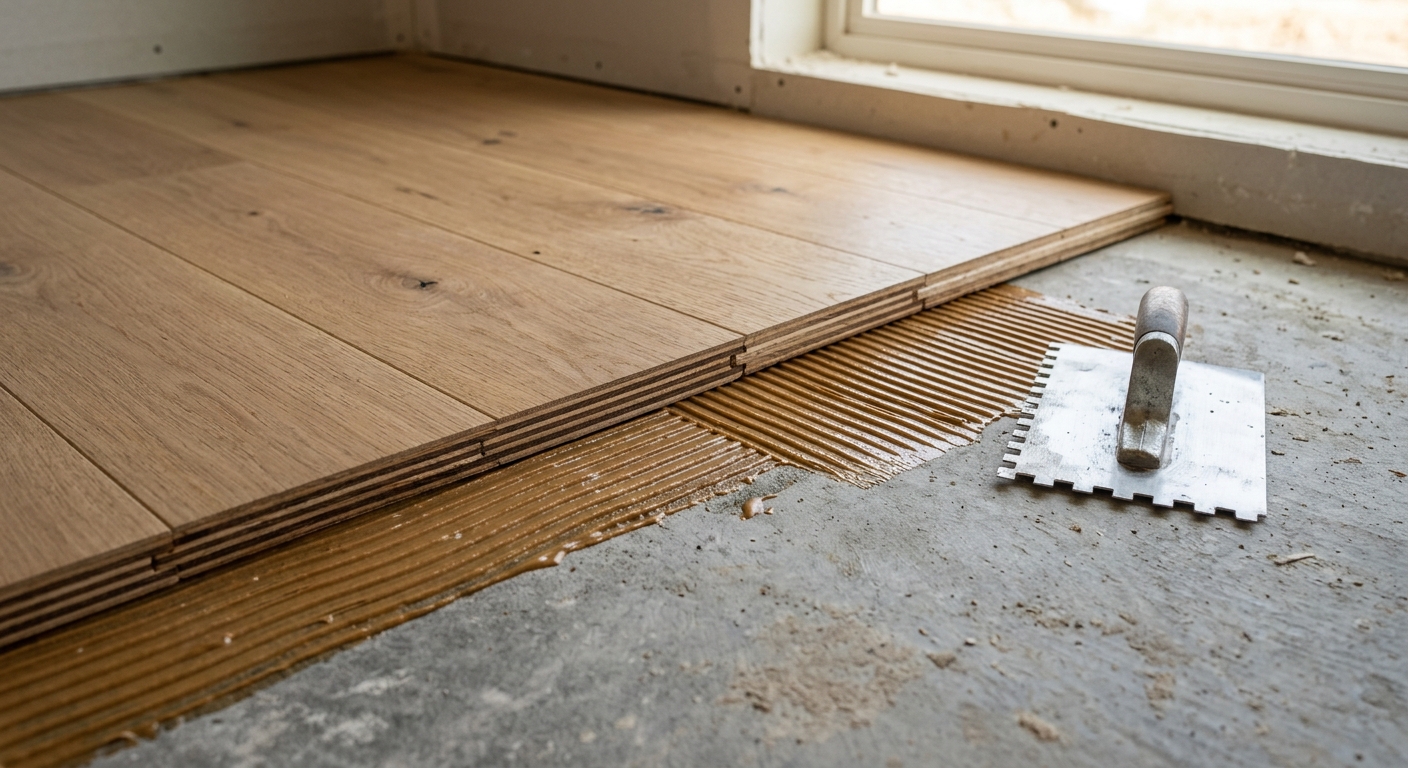
At Big Head Flooring, the hardwood question we get most often is the same one buried in every hardwood spec sheet: engineered or solid? The honest answer for almost every home we quote in Temecula, Murrieta, Menifee, and Oceanside comes down to one fact the national how-to posts skip. Out here your floor is going down over a concrete slab, not a wood subfloor. That changes the whole decision. Solid strip wood is built to be nailed into wood. On a slab there is nothing to nail into, and that alone steers most of our jobs to engineered.
Solid strip wood is built to be nailed into a wood subfloor. On a slab-on-grade home there is nothing to nail into, and that single fact steers most of our jobs to engineered.
We are licensed and insured, we run ASTM moisture testing on every slab, and we have pulled up enough failed wood floors across the Inland Empire and North San Diego County to have a firm opinion. This guide walks the same call we make on-site, so you know which one your home actually wants before anyone hands you a sample box. No shortcuts.
Engineered vs solid hardwood on a concrete slab: what actually decides it
On a slab-on-grade home, engineered hardwood wins the vast majority of the time, and the reason is structural, not preference. Solid hardwood is one species of wood all the way through, so it expands and contracts as a single piece every time the humidity moves. Engineered planks are a real hardwood wear layer bonded over a cross-laminated plywood or HDF core, and those cross-grain layers fight that movement. Over a slab that passes moisture you cannot see, the plank that stays dimensionally stable is the one that lasts.
Here is the head-to-head the way we lay it out for clients:
- Dimensional stability. Solid wood cups, crowns, and gaps as the moisture in it swings. Engineered's cross-laminated core holds its shape through the same swing. On a slab, stability is the whole ballgame.
- Install method. Solid strip wants a nail-down into a wood subfloor. Over a concrete slab, engineered goes down as a glue-down or a float, both of which suit a slab. Solid over a slab needs a nailed-down plywood layer first, which raises the floor height and the cost.
- Real wood surface either way. Both are genuine wood on top. A quality engineered plank sands and refinishes like solid, so you are not trading away the look or the wood feel to get the stability.
- Cost over the life of the floor. Solid can cost less per plank, but a solid floor that cups over a slab and needs re-sanding costs more per year than an engineered floor that just stays flat.
The mistake we correct most often: a solid oak floor nailed to a plywood layer over a slab, then cupping across the whole room a year later because nobody tested what the slab was doing underneath.
Can you glue hardwood to a concrete slab?
Engineered hardwood, yes, and glue-down is one of the two right ways to install it over a slab. Solid strip hardwood, no, not directly. You cannot bond solid wood straight to concrete and expect it to stay flat, because a solid plank moves too much for the adhesive to hold through the swing. That is exactly why engineered exists for slab homes. Its stable core lets it be glued directly to a properly prepped, moisture-tested slab.
Inland Empire fact: Nearly every newer home in Temecula, Murrieta, Menifee, and Wildomar is slab-on-grade. Older Escondido homes around Grand Avenue and Washington Park are pier-and-beam over a wood subfloor, which is the one profile where a nailed-down solid floor makes sense.
The two slab-friendly methods each have a place:
- Glue-down. The engineered plank is bonded directly to the slab with a moisture-rated adhesive. It feels the most solid underfoot, transmits the least sound, and is our usual call for a slab home. It demands a flat, dry slab, because the adhesive bonds to whatever is there.
- Floating. The planks lock to each other over an underlayment and are not fastened to the slab at all. It is faster and tolerates a slightly less perfect slab, and it is often the right call over a moisture barrier or in an HOA unit where the underlayment also carries a sound rating.
"Glue-down or float is not a coin flip. The slab's moisture number and flatness, and whether you are upstairs over a neighbor, decide which one your floor gets."
Either way, the slab has to earn it first. We run ASTM F1869 calcium chloride and ASTM F2170 relative humidity testing on the slab and confirm it meets the 3/16 inch over 10 feet flatness threshold your plank's warranty requires. A high moisture reading can force a mitigation step or rule a glue-down out entirely, and we would rather tell you that before you buy material. Ready when you are: call (760) 216-2984 and we will get a real moisture read off your slab before you spend a dollar.
Why engineered wins over slab-on-grade in the SoCal climate
The Inland Empire climate stacks the deck toward engineered on a slab. Inland cities run 100-degree-plus summers with 275-plus sunny days a year and intense west-facing UV, which builds real subfloor heat and dries indoor air hard. Coastal Oceanside and beach-side Vista run the opposite way, with marine humidity that stays higher and swings wider. Both extremes move a solid plank. The engineered core rides through both.
What the swing does to wood: wood is hygroscopic, so it absorbs and releases moisture with the air around it. A solid plank moves as one piece with every swing. An engineered plank's cross-laminated layers pull against each other and hold the plank flat.
There is a light factor too, not just a moisture one. Intense west-facing exposure fades and dulls an unprotected floor across those 275-plus sunny days, so we spec a UV-stabilized, factory-cured finish on engineered planks either way. That same finish quality is the coastal answer near the water, where we also swap zinc-plated transitions for stainless or anodized aluminum so salt cannot rust them. If you are near the coast specifically, our page on coastal hardwood flooring in Oceanside walks the salt-air spec on an actual job.
How many times can engineered hardwood be refinished?
This is the fear that pushes people back toward solid, and the honest number is smaller than solid but plenty for a real home. A quality engineered plank with a thick sawn wear layer can typically take two or three sandings over its life, which covers a residential floor's normal refinishing needs. The refinish count is decided by one thing: how thick the wear layer is above the tongue-and-groove.
"You are not giving up refinishing to get stability. A thick-wear-layer engineered floor sands two or three times, which is more refinishing than most homeowners ever actually use."
Here is how the wear layer sets the count:
- Thin wear layer (a couple of millimeters). Often a single light sanding, sometimes none. Fine for a rental turn or a low-traffic room, not our pick for a floor you want to refinish.
- Thick sawn wear layer. Sands two to three times, refinishing like solid wood. This is the spec we steer clients to when refinishing life matters.
- Solid, for comparison. Many sandings across its life, but only if it is installed where solid belongs, which on most of our jobs it is not.
When a wood floor is only surface-worn and you are deciding whether to sand it or start over, knowing whether to refinish or replace comes down to how much wear layer is left. We measure it before we recommend either way.
When solid hardwood still makes sense
We are not anti-solid. Solid hardwood is a genuinely great floor, and it still wins in one specific situation out here: an older raised-foundation home with a wood subfloor and a well-ventilated crawl space. That describes the pre-war and mid-century housing stock in Escondido around Grand Avenue, Washington Park, and the Felicita Park area, built pier-and-beam over tongue-and-groove subfloor rather than on a slab.
The honest read: on a wood subfloor with a dry, ventilated crawl space, a nail-down solid floor over the right vapor control is a legitimate, beautiful choice. On a slab, it is fighting physics.
In that raised-foundation setting, solid strip nails down the way it was designed to, the crawl space lets the assembly breathe, and you get a floor that can be sanded many times over decades. Where solid becomes a false economy is any slab-on-grade home, any wet room, or any west-facing space that bakes all summer, because in those spots the movement it was never built to handle is exactly what it gets. If your home is one of those older Escondido bungalows, tell us. Solid may be back on the table.
When hardwood is NOT the right call at all
Before you pick engineered or solid, there is a more basic question: does this room want wood at all? For a kitchen, a full bathroom, a laundry room, or an entry off a pool deck, the answer is usually no, whichever construction you choose. Wood is still wood, and a room that sees standing water and wet feet wants tile with a proper waterproof membrane or an SPC-core vinyl plank that does not care about moisture. Put the hardwood in the living areas, bedrooms, and halls where it belongs.
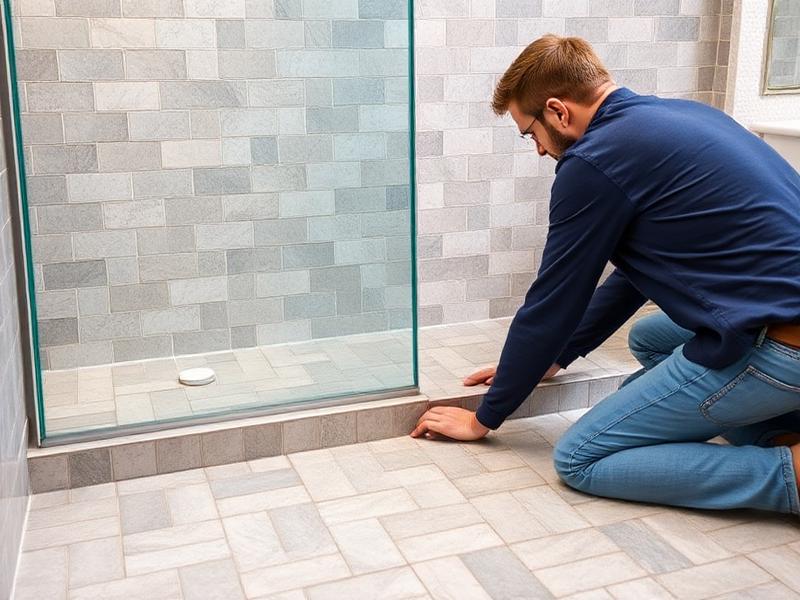
Where hardwood is worth every dollar: the main living spaces where you want real wood underfoot and are willing to spec the right construction, finish, and prep to earn it. Where it is a false economy: a wet room, or solid wood forced onto a slab it was never built for. If that is the room you are asking about, we will tell you straight. Tell us what you are planning and we will match the material to the room.
Frequently asked questions
How many times can engineered hardwood be refinished?
A quality engineered plank with a thick sawn wear layer can typically be sanded and refinished two or three times over its life, which covers a residential floor's normal needs. The count depends entirely on how thick the wear layer is above the tongue-and-groove. A thin-wear-layer plank may take only a single light sanding, while a thick sawn wear layer refinishes much like solid wood. Solid hardwood can be sanded more times, but only when it is installed where solid belongs, on a wood subfloor, which on most Southern California slab homes it is not. We measure the wear layer before we recommend refinishing or replacement.
Can you install engineered hardwood over a slab in California?
Yes, and it is the standard approach on the slab-on-grade homes that make up most newer construction in the Inland Empire and North County. Engineered's cross-laminated core stays dimensionally stable over concrete in a way solid strip cannot, so it can be glued directly to the slab or floated over an underlayment. Both methods suit a slab. What has to happen first is the slab work: we run ASTM F1869 calcium chloride and ASTM F2170 relative humidity testing and confirm the 3/16 inch over 10 feet flatness threshold, because a high moisture number can rule out a glue-down and a wavy slab fails a floating floor.
Can you glue solid hardwood to a concrete slab?
No, not directly, and we would not. Solid wood moves too much with humidity for adhesive to hold it flat to concrete, so it cups and gaps over a slab. Engineered hardwood is the material built for direct glue-down over a slab, because its stable core holds its shape. If you want solid wood over a slab, it requires a nailed-down plywood layer first, which raises the floor height and the cost, and even then the stability is not what you get from engineered. On most slab homes we spec engineered instead.
Is engineered hardwood as good as solid?
For a slab-on-grade home in Southern California, engineered is the better floor, not a compromise. You get a real hardwood surface you can sand and refinish, plus a core that stays flat over concrete through our heat and humidity swings. Solid still shines in an older raised-foundation home with a wood subfloor and a ventilated crawl space, like the pier-and-beam bungalows in Escondido, where it nails down the way it was designed to. The right answer is decided by what is under your floor, not by which one sounds more premium.
Do you serve my city?
We serve Escondido, Lake Elsinore, Menifee, Murrieta, Oceanside, Temecula, Vista, and Wildomar across the Inland Empire and North San Diego County. We are licensed and insured, run ASTM moisture testing on every slab, back our work with a two-year labor warranty, and offer free estimates on every project.
Get your hardwood floor matched to your slab
Do not let a beautiful wood floor fail early because it was the wrong construction for what is under it. Let us test your slab for moisture, check the flatness, and spec engineered or solid to how your home is actually built, in one honest quote. Call (760) 216-2984 for a free estimate, read about our hardwood flooring installation process, or see our page on coastal hardwood flooring in Oceanside. Installed right the first time, guaranteed.