Buying Guide —
Title 24 Window Replacement in California: What U-Factor and SHGC You Actually Need
Before you replace a window in California, one thing decides whether it passes: the U-factor and SHGC on the NFRC label. Here is what Title 24 actually requires in the Inland Empire and coastal North County, and why dual-pane low-E is the baseline we spec.
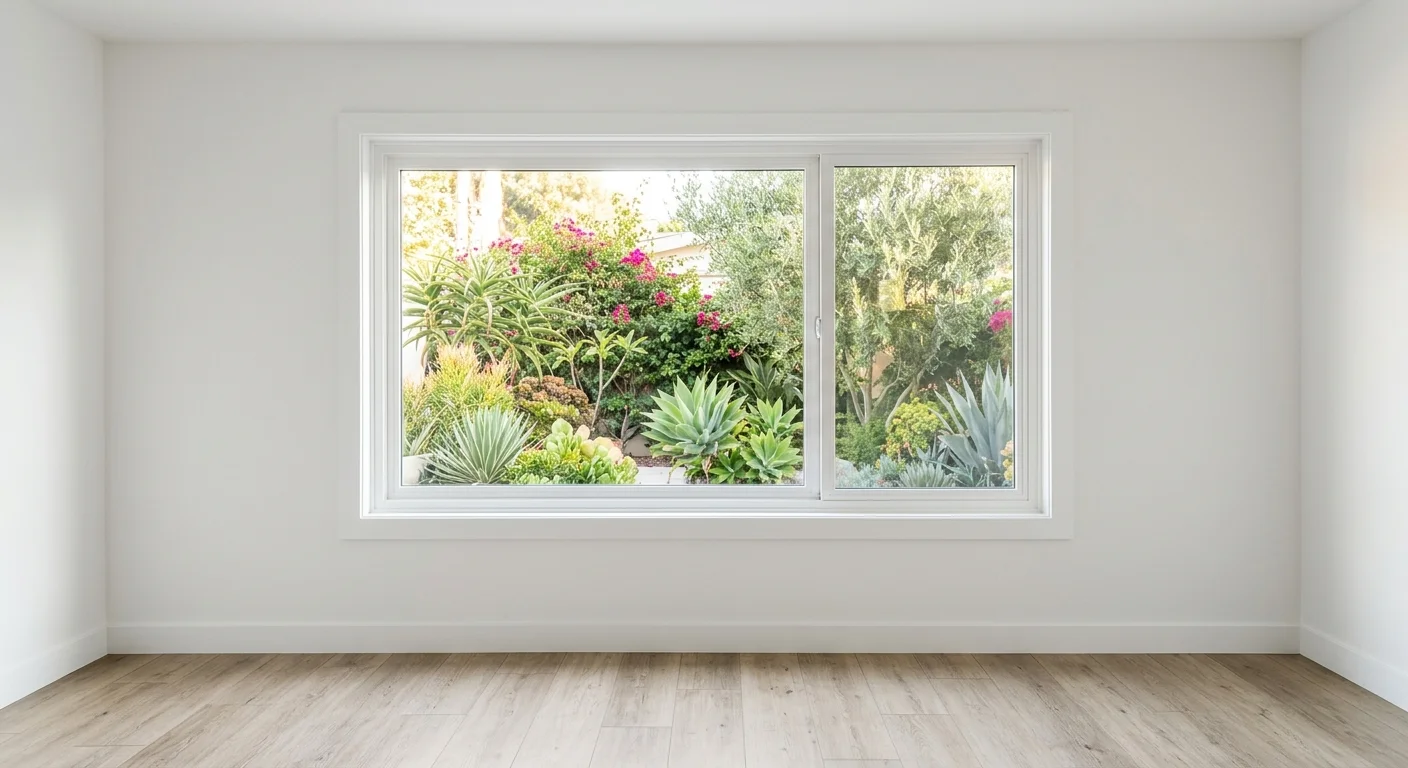
At Big Head Flooring, Title 24 comes up on nearly every window replacement we quote in Temecula, Murrieta, and Oceanside. Here is the short version before we measure a single opening: in California, a replacement window has to hit two specific energy numbers, U-factor and SHGC, printed right on the glass. Miss them and the window fails inspection and the permit does not close. Get those numbers right up front and the rest of the job is straightforward.
A replacement window in California is not just a product you pick off looks. It has to hit specific energy numbers printed on the glass, or the permit does not close.
Big Head Flooring is a licensed CSLB contractor, and window and door work is part of our scope. We are not going to quote you a window without verifying the frame condition and the rough-opening dimensions first, and we are not going to spec glass that fails Title 24. This guide walks the exact numbers so you know what you are buying before anyone shows up with a tape measure.
Title 24 window replacement: what the code actually requires
California's Title 24, Part 6 is the state energy code, and it treats a window swap as an "alteration" to your home. That means the replacement window has to meet the state's energy-efficiency standard, not the standard from whatever year your house was built. Two numbers on the window's NFRC label decide whether it complies: U-factor and SHGC. Both have to be at or below the prescriptive maximum for your climate zone, and a code inspector will look at that label before signing off.
Here is what each number means in plain terms:
- U-factor measures how much heat conducts through the whole window assembly, glass and frame together. Lower is better. It matters most for keeping conditioned air inside on a 105-degree Menifee afternoon or a cold desert night.
- SHGC (Solar Heat Gain Coefficient) measures how much of the sun's heat passes through the glass. Lower is better in a hot-dry climate. This is the number that decides how hard your AC works on a west-facing room that bakes all summer.
The mistake we correct most often: someone buys a window online because it looks right and the price is good, then finds out at inspection the SHGC is too high for the zone. The window is fine somewhere colder. It just does not pass here.
For most of the Inland Empire, that combination points straight at dual-pane low-E glass. A single-pane window cannot hit these numbers, and neither can most bare dual-pane glass without a low-E coating. That is why we treat dual-pane low-E as the floor, not the upgrade.
U-factor and SHGC requirements for California windows: the numbers by zone
Riverside County, where Temecula, Murrieta, Menifee, Lake Elsinore, and Wildomar sit, is California Climate Zone 10. Coastal North County around Oceanside and Vista falls in Climate Zones 7 and 8. For all of these hot-and-mixed zones, the Title 24 prescriptive path lands in the same range for replacement windows:
- U-factor: 0.30 maximum. This is the statewide prescriptive ceiling for fenestration in the 2022 energy code. A quality dual-pane low-E window with a good frame clears it.
- SHGC: 0.23 maximum. This is the tighter of the two for us. Hot inland and coastal zones (Climate Zones 2, 4, and 6 through 15, which covers all eight cities we serve) hold windows to a 0.23 solar heat gain ceiling. That low number is what forces a real low-E coating rather than clear glass.
The SHGC ceiling is the one that trips people up. U-factor 0.30 is easy to hit. SHGC 0.23 in our zones is what rules out the cheap clear-glass dual-pane you see on a big-box shelf.
There is also a performance-compliance path (an energy model that trades one measure against another across the whole project), but for a straightforward window-for-window replacement, the prescriptive numbers above are the target we spec to. The window's NFRC label lists both values in the corner. If the U-factor reads 0.30 or lower and the SHGC reads 0.23 or lower, the glass complies. That label is what the inspector checks, so we keep it and hand it to you.
Why dual-pane low-E is the baseline, not the upgrade
Once you know the SHGC has to sit at or below 0.23, the glass spec answers itself. A single pane of clear glass runs an SHGC around 0.80 and a U-factor near 1.0. It is not close. Bare dual-pane clear glass gets the U-factor into range but leaves SHGC far too high for our climate zones. The only spec that reliably hits both numbers in Southern California is dual-pane glass with a low-E (low-emissivity) coating, usually with an argon gas fill between the panes.
"In our zones, dual-pane low-E is not the premium option we upsell. It is the minimum that passes Title 24. We spec it as the baseline and price up from there if you want triple-pane or a specific frame."
The low-E coating is a microscopically thin metallic layer on the glass that reflects infrared heat back outside in summer while letting visible light through. That is what pulls the SHGC down under 0.23 without turning your windows into mirrors. On a west-facing room with the same intense UV exposure that degrades exterior doors out here (surface temps on west walls can exceed 150 degrees), the low-E coating is doing most of the work of keeping that room livable in August. This is also where pairing windows with door replacement for west-facing exposures pays off, since the same heat load hits both.
Do I need a permit to replace windows in California?
In most California jurisdictions, yes. A like-for-like replacement window is generally a permitted alteration, and the permit is what triggers the Title 24 compliance check. The permit is pulled through your local Authority Having Jurisdiction, which for our service area means the Riverside County or San Diego County building department, plus the applicable city building department (Temecula, Murrieta, Menifee, Escondido, and so on each have their own). Requirements and turnaround vary by city, so we confirm the specifics for your address before the job starts.
The permit is not just red tape. It is the mechanism that protects you. Inspection confirms the glass meets the U-factor and SHGC numbers, the flashing and waterproofing are correct, and the install is not going to leak or fail in five years. Skipping the permit to save a step can also surface later when you sell the home and a buyer's inspector or the county records flag unpermitted work.
When you do NOT need new windows yet
We are not here to talk you into a full window replacement you do not need. If your windows are already dual-pane, the frames are sound and square, the seals are intact (no fogging or condensation between the panes), and you are not doing this for a permitted remodel, you may not need to replace anything yet. A failed seal on one or two windows can sometimes be addressed on its own without re-doing the whole house. And if your only complaint is drafts around otherwise-good windows, that is often a caulking and weather-stripping fix, not a replacement.
Where replacement is genuinely the right call: single-pane glass anywhere in the house, aluminum frames that conduct heat straight indoors, seals that have already failed and fogged, or any window opening that has to be brought up to Title 24 as part of a permitted project. In those cases, dual-pane low-E is the honest baseline. If you are on the fence, call us and we will tell you straight whether you are there yet.
Frequently asked questions
Is dual-pane low-E glass required for window replacement in California?
Effectively, yes, in our climate zones. Title 24 caps SHGC at 0.23 and U-factor at 0.30 for replacement windows across the Inland Empire and coastal North County. A single pane cannot meet those numbers, and bare dual-pane clear glass leaves the SHGC too high. Dual-pane glass with a low-E coating is the spec that reliably hits both, which is why we treat it as the baseline rather than an upgrade. The NFRC label on the glass shows both values, and the inspector checks it.
Do I need a permit to replace windows in California?
In most California jurisdictions a replacement window is a permitted alteration, and that permit is what triggers the Title 24 energy check at inspection. The permit is pulled through your local building department, which for our service area is the Riverside County or San Diego County AHJ plus the applicable city (Temecula, Murrieta, Menifee, Escondido, and the rest each have their own department). Requirements and turnaround vary by city, so we verify the details for your address before starting.
What U-factor and SHGC do I need for windows in the Inland Empire?
For Riverside County (Climate Zone 10) and coastal North County (Zones 7 and 8), the Title 24 prescriptive targets for replacement windows are a U-factor of 0.30 or lower and an SHGC of 0.23 or lower. The SHGC ceiling is the tighter of the two in our hot zones and is what forces a real low-E coating. Both numbers are printed on the window's NFRC label, and both have to be at or under the maximum for the glass to comply.
Do you serve my city?
We serve Escondido, Lake Elsinore, Menifee, Murrieta, Oceanside, Temecula, Vista, and Wildomar across the Inland Empire and North San Diego County. We are a licensed CSLB contractor, licensed and insured, back our work with a two-year labor warranty, and offer free estimates on every project.
Get windows that pass Title 24 the first time
Do not guess at the U-factor and SHGC and hope the window passes inspection. Let us verify your frame condition and rough-opening dimensions, spec dual-pane low-E glass that meets Title 24, and handle the permit through your city. Call (760) 216-2984 for a free in-home estimate, or read more about our window replacement service. Installed right the first time, guaranteed.