Repair Guide —
Repair or Replace Your Floor? How We Decide on Inland Empire Homes
Most floor problems are not a mystery once you know what the symptom is telling you. Here is how we read hollow spots, peaking seams, squeaks, and water-damaged plank, and how we decide between a targeted repair and a full replacement on Inland Empire homes.
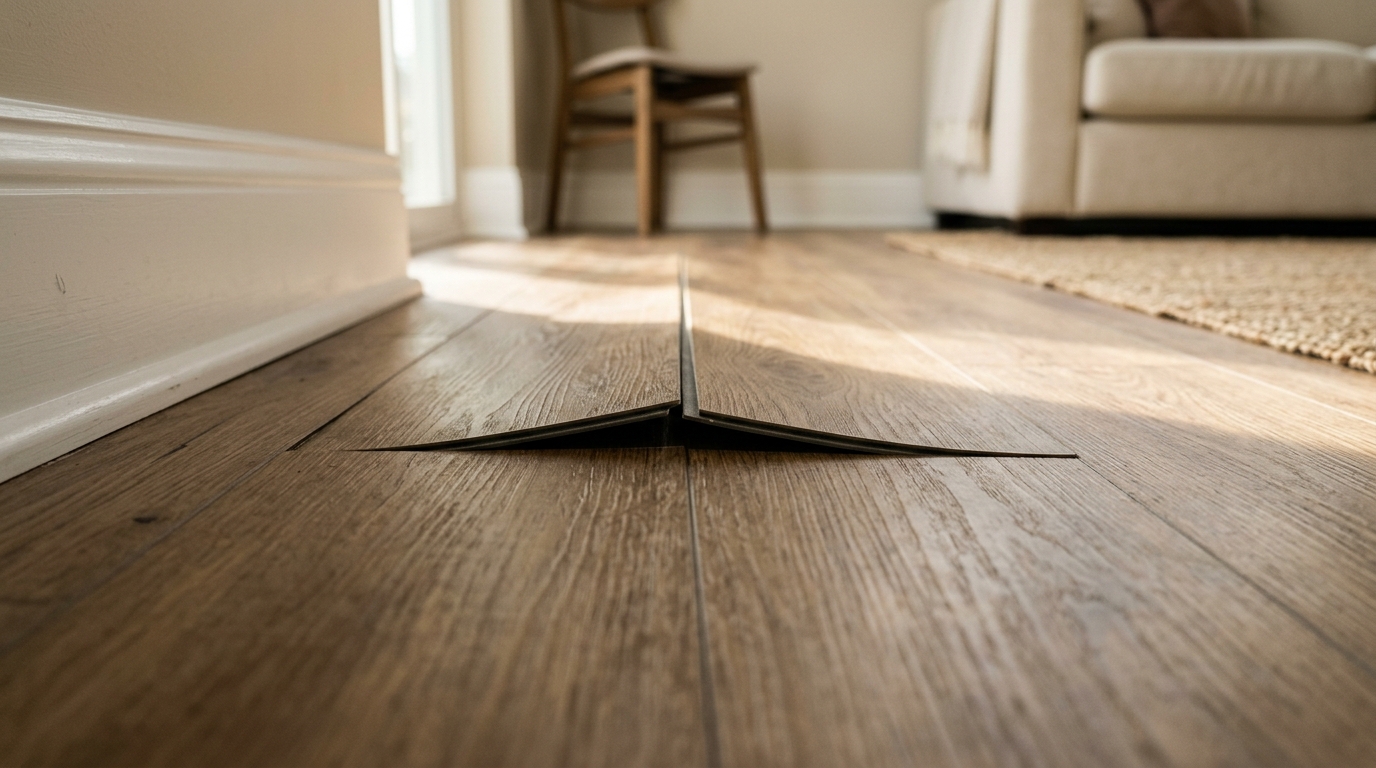
At Big Head Flooring, the call we get most often is some version of "part of my floor went bad, do I fix it or rip it all out?" The honest answer is that it depends entirely on what failed and why. A single squeaky board and a slab that is telegraphing cracks through your tile are two completely different problems, and only one of them is a quick repair. We have pulled up enough floors across Temecula, Murrieta, Menifee, and Escondido to read the symptoms before we ever lift a plank.
A single squeaky board and a slab telegraphing cracks through your tile are two different problems, and only one of them is a quick repair.
We are licensed and insured, we run ASTM moisture testing on every slab, and we will tell you when a repair is the smart, honest call and when it is throwing good money after bad. No shortcuts. This guide walks the same diagnosis we run on-site, symptom by symptom, so you know what you are looking at before you call.
Repair or replace flooring: the question behind the question
The repair-versus-replace decision comes down to three things: what failed, what caused it, and whether the cause is still active. Fix the plank but leave the cause in place and you are repairing the same spot next year. A cracked tile from a dropped pan is a clean repair. The same crack caused by slab movement underneath is a replacement conversation, because the slab is going to keep moving.
How we frame it: repair when the failure is isolated and the cause is dead. Replace when the cause is still live under the floor, the failure is spread across the room, or the moisture number rules the existing material out.
Here is how we sort it on a typical IE or coastal home:
- Repair makes sense when the damage is one board, one seam, or one tile, the surrounding floor is sound, and whatever caused it is no longer happening. Most squeaks, a chipped plank, a single lifted board near a baseboard.
- Replacement makes sense when the failure shows up across the room, the slab is moving or reading high for moisture, or the existing material was the wrong spec for the room in the first place. Laminate that swelled in a kitchen is not a repair, it is a material that never belonged there.
If the failure is isolated and the cause is dead, here is how our floor repair work goes. If the cause is still live under the slab, keep reading, because patching over it is the most expensive mistake we see.
Why is my floor uneven, and what are those hollow spots?
An uneven floor with hollow-sounding spots almost always means the flooring has lost contact with the substrate underneath. Tap a hollow tile and you hear a dull echo instead of a solid thud. That gap is the floor telling you the bond failed or the slab was never flat enough to begin with, and walking on it slowly works the material loose.
Two causes drive most of what we find out here:
- Slab-on-grade movement. Nearly every newer home in Temecula, Murrieta, Menifee, and Wildomar is built on a slab on grade. Slabs move with soil and moisture, and that movement telegraphs straight up through rigid tile as cracks and hollow spots. Older Escondido homes around Grand Avenue and Washington Park are pier-and-beam over crawl spaces, a different profile but the same result when the subfloor flexes.
- A substrate that was never flat. Flooring warranties require the slab to sit within 3/16 inch over 10 feet. Skip that flatness check and a floating floor bridges the low spots, loses contact, and goes hollow at the gaps. This is the step the big-box installers skip, and it is why so many "new" floors fail early.
"Hollow under tile is not always a replacement. But it is always a reason to find out whether the slab is flat and whether it is moving, before you spend a dollar on the surface."
This is exactly why subfloor prep decides whether a repair holds. We use flexible polyurea crack filler instead of rigid epoxy so the repair moves with the slab instead of cracking again, and self-leveling underlayment rated to 1/2 inch depth to bring a low slab back into the flatness spec. Patch the surface without correcting the substrate and the hollow spots come right back.
Squeaky floor causes, and which ones are worth fixing
A squeak is friction. Something is rubbing against something else every time you step, and the source decides whether it is a 20-minute fix or a sign of a bigger problem. The good news is most squeaks are minor. The bad news is a few of them are the floor warning you about the subfloor.
Here is what the squeak is usually telling us:
- Loose fasteners or a board that lifted slightly. The most common cause and the easiest fix. A plank that worked loose near a baseboard rubs its neighbor. This is a clean, targeted repair.
- Movement at a transition or a high spot. When a slab is not flat, the floor flexes over the high point and squeaks at the edges of the dip. Fixing the squeak means correcting the flatness, not just the surface.
- A subfloor problem on pier-and-beam homes. In Escondido's older bungalows, a squeak can mean the tongue-and-groove subfloor has loosened or a joist has shifted. That is worth investigating before you cover it up.
The honest read: a squeak from a loose board is a repair. A squeak that moves around the room, or comes with hollow spots and visible unevenness, is the floor pointing at the substrate. We figure out which one you have before quoting.
If your floor is just squeaky and otherwise flat and dry, that is repair territory. Reach us at (760) 216-2984 and we will tell you straight whether it is a quick fix or something deeper.
When replacement beats repair: thinking in cost per year
Repair is not automatically the cheaper choice. The smarter way to compare is total cost over the life of the floor, not the price of the single fix in front of you. A repair that buys you another year on a floor that is failing across the room is the most expensive option there is, because you pay for it again, and then you pay to replace the whole thing anyway.
"A floor that lasts fifteen years is cheaper per year than the same floor patched three times before it gets torn out. We do the math with you before you decide."
Replacement wins when the failures are spread out, when the original material was wrong for the room, such as laminate that swelled in a wet kitchen, or when the slab tested high for moisture and will keep attacking the existing floor. In those cases a fresh install on a properly prepped, moisture-tested slab is the cheaper number over time. Here is how our flooring installation handles the prep and testing that makes the new floor last, so you are not back here in five years. We give upfront, honest quotes with no hidden fees, and we never quote a final price before a site visit because the slab decides the prep.
The Inland Empire failure modes we plan around
Floors out here fail in specific ways tied to our climate and soil, and reading those patterns is half the diagnosis.
- Slab moisture near the lake. Around Lake Elsinore we have logged calcium chloride results as high as 8 pounds per 1,000 square feet on slab-on-fill, well past what most floors are rated for. A high reading can rule a repair out and force a moisture-tolerant replacement, which is why we test before we recommend.
- West-facing UV and heat. With 275-plus sunny days a year and intense west-facing exposure, hardwood fades and floors in those rooms see real subfloor heat through the summer. Material that warps or swells in that swing was never the right call there.
- Coastal humidity in Oceanside and beach-side Vista. Salt air and marine moisture push us toward materials and transitions that do not care about humidity, and corrode the cheap zinc-plated strips a budget repair leaves in place.
When a repair is genuinely the wrong call
We are not here to oversell a replacement, but we will not patch a floor that is going to fail again, either. Do not pay for a repair when the slab is reading high for moisture, when the same failure is showing up in three places across the room, or when the original material was wrong for a wet or west-facing space. In those rooms a repair is a false economy. We would rather tell you that now than take your money twice.
Frequently asked questions
How can I tell if my subfloor is damaged?
The surface usually tells you before you ever open anything up. Hollow-sounding spots when you tap, soft or spongy areas underfoot, squeaks that move around the room, lifting or cupping boards, and a wavy, uneven feel as you walk are all signs the substrate below has a problem. On slab-on-grade homes that often means slab movement or moisture, and on older pier-and-beam Escondido homes it can mean a loosened tongue-and-groove subfloor or a shifted joist. We confirm it with ASTM F1869 calcium chloride and ASTM F2170 relative humidity testing on the slab, and a flatness check against the 3/16 inch over 10 feet threshold, so you get a real number instead of a guess.
Is a hollow spot under my tile always a replacement?
No. A hollow spot means the tile lost contact with the substrate, but the fix depends on the cause. If it is isolated and the slab is flat and dry, it can be a repair. If the slab is moving or telegraphing cracks, the hollow spots will keep coming back and replacement on a properly prepped slab is the better long-term call. We test first, then tell you which one you have.
Will you tell me if I do not actually need a replacement?
Yes. If the failure is isolated, the cause is no longer active, and the surrounding floor is sound, a targeted repair is the honest, cheaper call and that is what we will recommend. We give upfront, honest quotes with no hidden fees or surprises.
Do you serve my city?
We serve Escondido, Lake Elsinore, Menifee, Murrieta, Oceanside, Temecula, Vista, and Wildomar across the Inland Empire and North San Diego County. We are licensed and insured, back our work with a two-year labor warranty, and offer free estimates on every project.
Get a straight answer on your floor
Not sure whether you are looking at a repair or a replacement? Let us get a moisture reading off your slab and read the symptoms in person before you spend anything. Call (760) 216-2984 for a free estimate, see how our floor repair work goes, or read about our flooring installation process for when replacement is the right call. Installed right the first time, guaranteed.